

Fire Safety for Outdoor Catering in Cumbria: What Event Organisers Expect
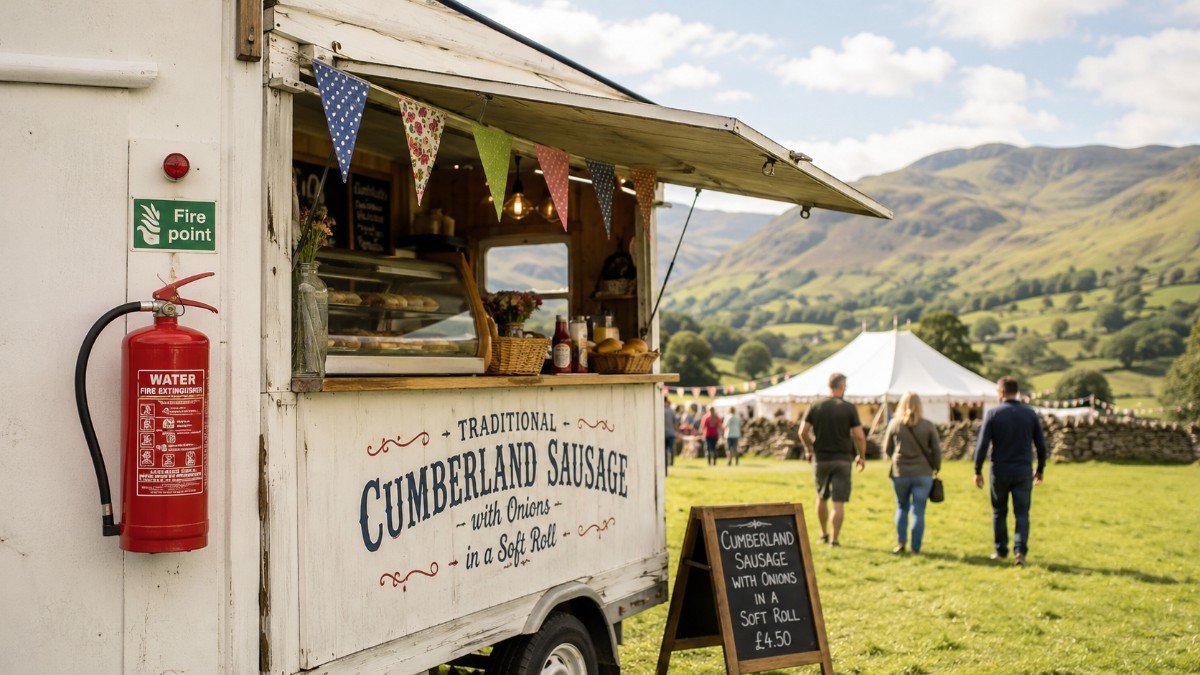
Before you serve a single burger at a Cumbria food festival, the organiser will want proof that your setup is safe. That means the right fire extinguishers, well-maintained gas equipment, and a written fire risk assessment that matches your stall. This guide covers what you need for outdoor catering fire safety, what organisers check for, and where traders most often fall short.
Why organisers check your fire safety
A catering pitch packs a lot of risk into a small space: gas cylinders, open flames and hot oil, often close to crowds and marquees. Event organisers run thorough pre-event checks because they have a duty to keep the whole site safe, and a single trader who turns up unprepared can put everyone at risk.
There is also a duty on you. As the person in control of your pitch, you are responsible for assessing and managing the fire risk at your own stall. The organiser cannot do that for you, which is why almost every event now asks for your paperwork before they confirm a booking.
What organisers expect from your pitch
The extinguisher you need depends on what you are cooking with, and matching the right type to the risk matters, because the wrong one can make a fire worse.
- Deep-fat fryer or hot oil: a wet chemical (Class F) extinguisher. Water or foam on a fat fire can cause a fireball, so this is the one to get right.
- Electrical equipment: a CO2 extinguisher, which is safe on live equipment and leaves no residue on food-prep surfaces.
- General cover: let your risk assessment and a competent supplier confirm what else your pitch needs.
Every extinguisher should be given a basic service at least once a year by a competent person. Organisers check the service label, and an out-of-date extinguisher is usually treated the same as having none at all. You will also want a fire blanket within easy reach of your cooking.
Gas and LPG: what good looks like
Gas is the part organisers scrutinise most, and rightly so. Cylinders should be stored and used upright, kept outside any enclosed area, and away from anything that could set them off. Spare cylinders go separately, never inside a closed van or under a counter. Check hoses, regulators and connections before each season and replace anything cracked or perished. If your setup has changed, get it inspected by a competent gas engineer.
Your fire risk assessment must match your actual equipment, cylinder sizes, cooking oils and pitch layout. Experienced safety officers spot template documents quickly, and a vague assessment is a common reason traders are turned away on the day.
Pre-season checklist
Run through this before your first event of the summer.
Equipment and documents
- Review and update your fire risk assessment for this year’s setup.
- Check every extinguisher is in date, and book a service if any are due before the season ends.
- Inspect gas hoses, regulators and connections, and replace anything damaged.
- Confirm your fire blanket is accessible and undamaged.
- Keep your certificates and risk assessment ready to hand over, on paper and digitally.
Site and team
- Test your generator and check all cables are outdoor-rated, fully unwound and undamaged.
- Brief every team member on extinguisher locations, types and basic use.
- Confirm cylinder storage and pitch layout meet the event’s site rules.
- Know how you would raise the alarm and call for help if a fire started.
What the law expects of you
As the person in control of your pitch, you are responsible for carrying out a suitable fire risk assessment and acting on what it finds. A clear, site-specific assessment is the document organisers and their safety officers ask to see, so it pays to get it right before you arrive rather than scrambling at the gate.
Frequently asked questions
What fire extinguisher do I need for an outdoor catering stall?
It depends on your cooking method. A deep-fat fryer or hot oil needs a wet chemical (Class F) extinguisher, and live electrical equipment needs CO2. Many traders carry more than one type to cover the different risks on their pitch, plus a fire blanket near the cooking.
Do I need a fire risk assessment to trade at a food festival in Cumbria?
Yes. You are responsible for the fire risk on your own pitch, so you need an assessment specific to your equipment and layout. Most Cumbria organisers ask for a written copy before they confirm your booking.
How often should my extinguishers be serviced?
A basic service at least once a year by a competent person. Organisers check the service label, and an out-of-date extinguisher is usually treated as no extinguisher.
Sources
- Health and Safety Executive (HSE), Event safety and LPG storage and use guidance (hse.gov.uk).
- British Standards Institution (BSI), guidance on the maintenance of portable fire extinguishers and fire blankets.
Getting ready for the event season?
Beacon Fire Protection supplies and services fire extinguishers for caterers and events across Cumbria and the Lake District, and can advise on the right cover for your pitch. Get your fire safety sorted before your first event.
Call 01768 863 551