

Fire Door Inspections in Schools: Why August Is the Right Time
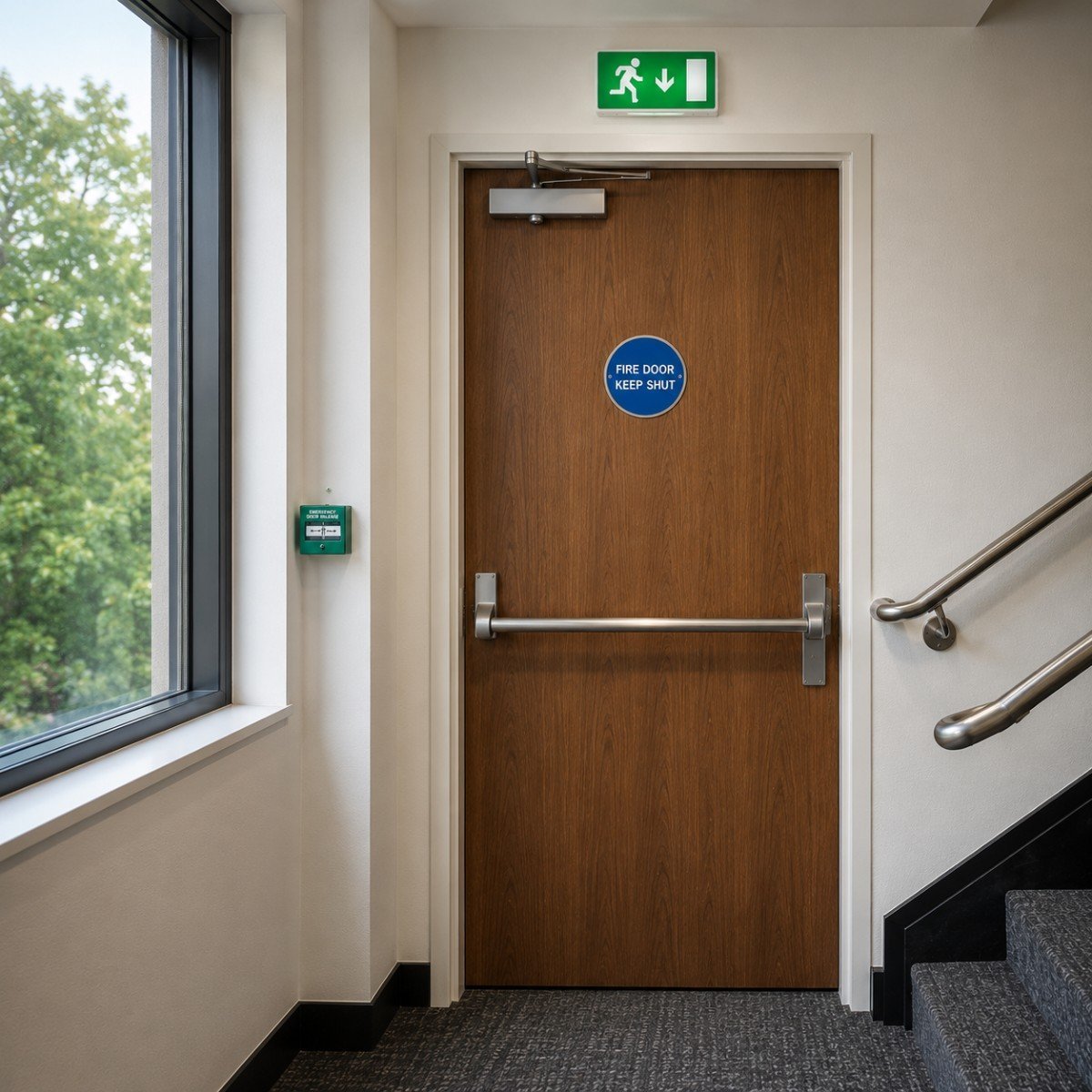
August gives schools a clear window to get fire doors inspected properly. Corridors are empty, furniture is not blocking doorways, and there is time to fix any problems before the first day of term. If your school has not booked its fire door inspection yet, this is the month to do it.
Who is responsible for fire doors in a school?
Fire doors in schools are part of the building’s fire safety, and someone has to keep them working. That responsible person is normally the employer, which in practice means the governing body, academy trust or local authority, depending on how the school is run. They are expected to keep fire safety measures in place and in good working order, guided by an up-to-date fire risk assessment.
If a fire door cannot hold back smoke or fire because it was not maintained, the consequences can be serious for everyone inside. The duty is the same whether you run a small primary or a large secondary across Cumbria.
What do school fire doors need to do?
A fire door is designed to hold back fire and smoke for a set time, usually at least 30 minutes in a school, giving everyone time to get out and giving the fire service time to respond. Higher-risk areas such as boiler rooms or plant rooms often need doors that hold back fire for longer.
For that to work, a fire door has to close fully on its own every time. A door propped open with a wedge or a bin offers no protection at all. Where a door genuinely needs to stay open for accessibility or traffic flow, it should be fitted with a device that releases and lets the door close automatically when the alarm sounds.
A fire door wedged open cannot do its job. The responsible person must make sure fire doors close fully. If staff need a door held open, fit an alarm-linked hold-open device instead.
Why August works best
During term time, classrooms are full, corridors have foot traffic and store cupboards are stacked against walls. Inspecting a fire door properly means checking the whole door leaf, the frame, the seals, the hinges and the closer. That is hard to do with a class of thirty on the other side.
August sorts this out. Site teams are often in doing summer maintenance, furniture has been moved for deep cleaning, and every door can be opened, closed and tested without working around lesson timetables. If repairs are needed, there is time to order and fit parts before September. Booking now also avoids the autumn rush, when everyone remembers their fire safety duties at once and dates get harder to find.
What a fire door inspection covers
When our inspectors arrive at a school, they work through every fire door on a structured checklist.
What we check on each fire door
- The door leaf: no warping, holes, damage or unauthorised changes such as slots cut into it.
- The seals: the strips around the edge that swell in heat and block smoke are present, continuous and undamaged.
- The closer: the door closes fully into the frame from any angle without anyone helping it.
- The gaps: the gaps around the leaf are even and within the right tolerance when the door is shut.
- The hinges: three or more fitted, all secure, with no missing screws or movement in the frame.
- The signs and label: the correct “keep shut” signage is in place, along with the fire rating label on the door edge.
Each door gets a pass, advisory or fail outcome, and the school receives a written report for its files. Where a door needs work, the report explains what is wrong and how urgent it is, so you can deal with the most serious problems first.
Tie it into your back-to-school check
Fire doors do not work in isolation. A door that closes properly but leads to a corridor with faulty emergency lighting is not doing its full job. August is a good time to review your fire risk assessment, check that escape routes are clear, confirm alarms have been tested over the summer, and make sure staff know the evacuation procedure for the new year. A fresh school year often brings changes, such as new layouts, new staff and building work finished over the summer, all of which can affect fire doors and escape routes.
Frequently asked questions
How often should school fire doors be inspected?
There is no fixed legal interval. The duty is to keep fire doors in good working order, guided by your fire risk assessment. As best practice, a competent inspection roughly twice a year is sensible, with quick visual checks by site staff more often. Many schools book a full inspection over the summer holidays.
Can school staff inspect fire doors themselves?
Staff can do basic visual checks, such as confirming doors close fully and are not propped open. A detailed inspection covering the seals, the gaps and the hinges should be done by a competent person trained in fire door inspection.
What happens if a fire door fails inspection?
It needs repair or replacement depending on the fault. Small issues such as a worn seal or a loose hinge can often be fixed on site the same day, while a warped or damaged door usually needs replacing. The report grades each issue by urgency so you can prioritise.
Beacon Fire Protection fire door inspection guidance, in line with recognised UK fire safety duties and fire door standards.
Book your school’s fire door inspection for August
Beacon Fire Protection inspects and reports on school fire doors across Cumbria, with time to fix problems before term starts. Call 01768 863 551 or get in touch at beaconfireprotection.co.uk.
Call 01768 863 551