
Holiday Let Fire Safety in the Lake District: What Gets Checked
If you run a holiday let in the Lake District, holiday let fire safety pressure comes from three directions at once: the law, your insurer and the booking platforms you list with. Getting one right does not cover you for the others. This guide explains what each one looks for and the gaps our engineers see most often on pre-season visits across Cumbria, so you can sort them before your first summer guests arrive.
Why holiday lets carry extra fire risk
The big difference with a holiday let is simple: your guests do not know the building. In an unfamiliar place at night, the few seconds it takes to find the stairs or the front door really matter. That is why working, linked alarms and a clear way out count for so much more than they would in your own home, where everyone knows the layout in the dark.
What the law expects from you
Once people sleep in your property, the law treats you as the person responsible for their fire safety. That means a fire risk assessment carried out for your specific property, suitable smoke detection, and sensible provisions such as extinguishers, a fire blanket, a clear escape route and fire safety information for guests. To get this right, you need someone competent to look at the property and tell you where the gaps are.
What platforms and insurers actually check
Airbnb and Booking.com mostly rely on you to declare that things are in place, backed up by guest reviews. Neither sends an inspector. But that cuts both ways: if a guest reports a missing or dead alarm, a platform can suspend your listing fast, and whatever you ticked at sign-up becomes a record of what you said was there. Treat platform requirements as the floor, not the target.
Insurers go further. Most holiday let policies carry fire safety conditions, and a condition that has lapsed can affect a claim no matter what caused the fire. Conditions vary, so the only reliable move is to read your own policy. Many insurers also expect a periodic electrical safety check by a qualified electrician.
Your insurer will not remind you when something is due. If your extinguisher service, fire risk assessment or chimney sweep certificate has slipped, that can count against a claim later. Check your policy wording now, well before peak season, rather than after a fire.
What to fix before peak season
Our engineers carry out pre-season fire safety checks on holiday lets right across Cumbria, and the same handful of gaps come up again and again. A fire risk assessment nobody has looked at in years. Standalone alarms that will not wake a guest two floors up. Extinguishers past their service date. Missing or vague guest fire safety notices. Where there is a wood burner, we also check the installation looks right and the chimney has been swept.
Pre-season fire safety checklist
- Fire risk assessment: get it reviewed if the property or its use has changed, or if it has simply drifted out of date.
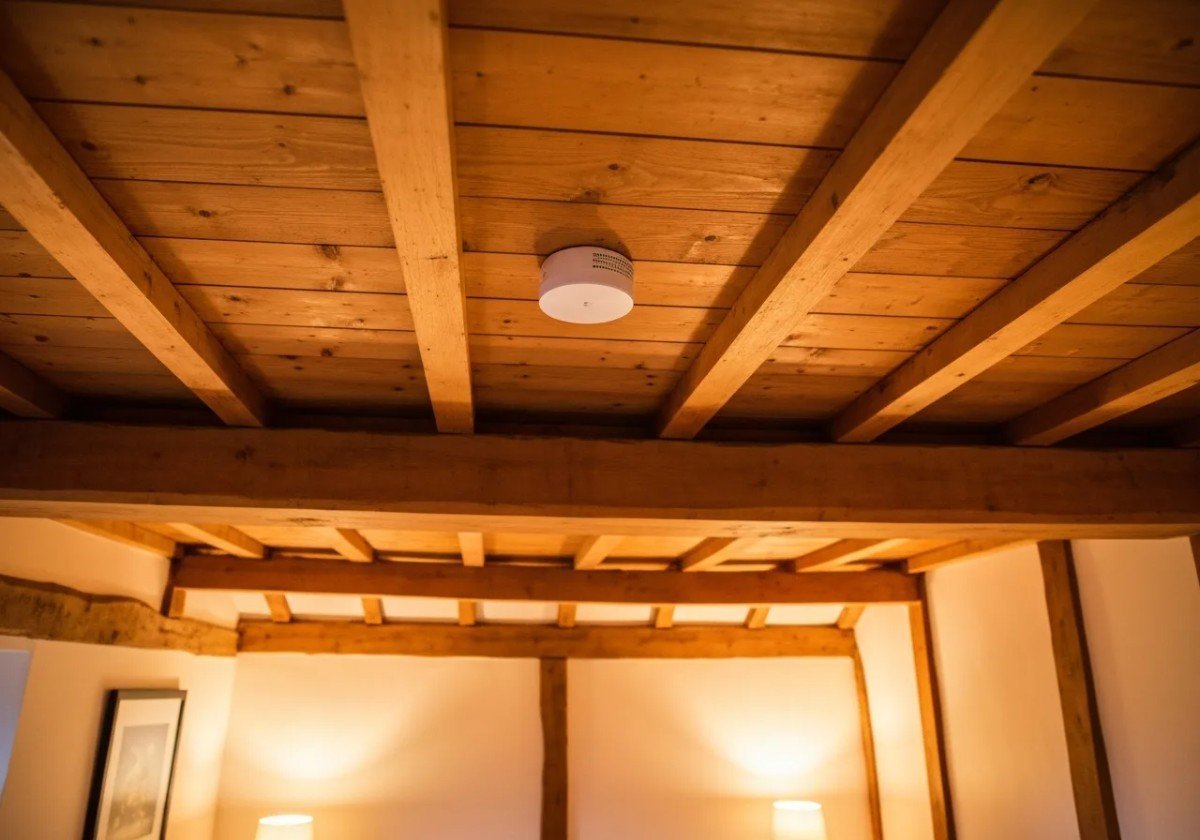
- Alarms: test every smoke and carbon monoxide alarm, replace tired batteries or units, and confirm the alarms are linked so one sounds them all.
- Extinguishers: check the service labels and book a basic service if the last one is around a year old.
- Fire blanket: make sure it is mounted in the kitchen and easy to grab, not tucked behind a cupboard door.
- Escape route: walk it after dark and ask whether a first-time guest could find the front door in the dark.
- Guest information: check the fire safety notice is visible, current and specific to your property.
- Insurance conditions: read the fire section of your policy and confirm each condition is met and on file.
- Solid fuel: if you have a wood burner, keep the installation paperwork and a current chimney sweep certificate, and fit a carbon monoxide alarm in that room.
Holiday let fire safety: your questions answered
Do I need a fire risk assessment for a holiday let?
Yes. Any property where guests sleep needs a fire risk assessment carried out by someone competent, whether you let through Airbnb, an agency or privately. It should be specific to your property and looked at again whenever the building or its use changes.
How often should fire extinguishers be serviced?
About once a year for a basic service by a competent person. An out-of-date extinguisher leaves guests without reliable firefighting kit and is the kind of thing an insurer or assessor will pick up on.
What alarms do I need in a holiday cottage?
As a minimum, smoke alarms on every storey, ideally mains-powered and linked so they all sound together, covering the escape route and higher-risk rooms. Any room with a wood burner or other fuel-burning appliance also needs a carbon monoxide alarm.
Sources
- Home Office and MHCLG, detailed analysis of fires attended by fire and rescue services, England, April 2024 to March 2025 (gov.uk).
Getting your holiday let ready for the season?
Beacon Fire Protection provides holiday let fire safety checks, alarm and extinguisher servicing and friendly guidance for owners across Cumbria and the Lake District. Get in touch and we will help you sort it before your first guests arrive.
Call 01768 863 551