

Is Your Emergency Lighting Ready for the Dark Months?
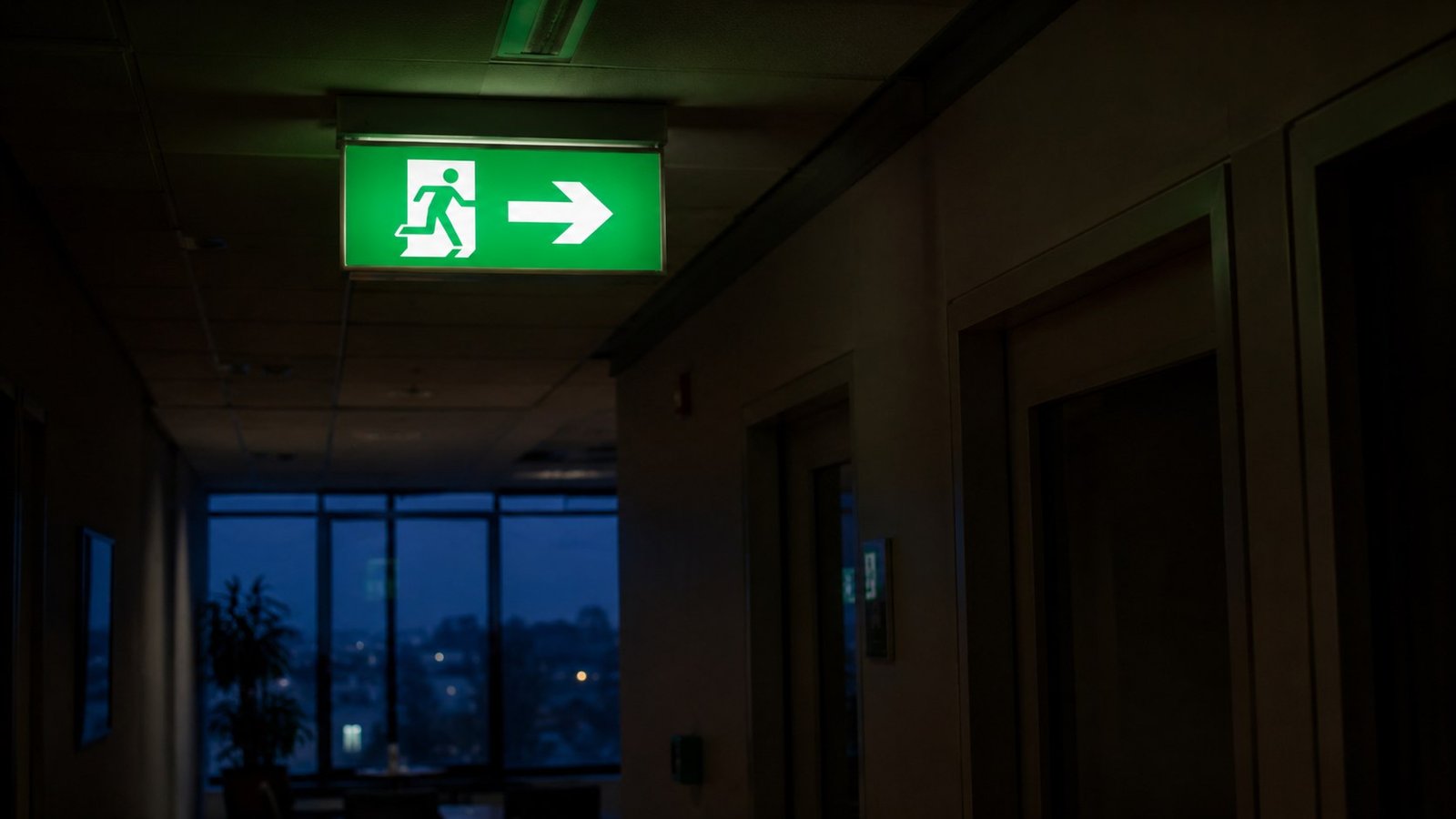
When the clocks go back on 25 October, the afternoons close in fast across Cumbria. If the power failed during a fire on a dark winter evening, your emergency lighting is what gets people to the exits. The trouble is that a light which looks fine on the wall can still fail when it is actually called on. The annual test is what tells you the truth, and October is the time to find out, not November.
What emergency lighting is really for
Emergency lighting exists for one moment: when the normal power goes off and people need to get out. In a fire, mains lighting can fail early, and a corridor you know well in daylight becomes disorientating in the dark and smoke. The emergency lights mark the escape routes and the exits so people can leave calmly. If they do not come on, or do not stay on long enough, that safety net is gone.
What the annual test reveals
A quick glance does not tell you whether the batteries still hold their charge. That is what testing is for, and it comes in two parts. A short monthly function test checks the lights switch over to battery and come on. Once a year, a full duration test runs them for their rated time, usually three hours, to prove the batteries will actually last through a real evacuation. It is the annual test that catches tired batteries, and those are exactly what a damp, low-use winter tends to produce.
As the person responsible for the premises, you must keep your escape routes and their lighting in effective working order. Regular testing, with the results recorded, is how you show it.
What to check, and when
Every month
- Short function test: confirm each fitting switches to battery and lights up.
- Walk the escape routes and check no exit sign is out or obscured.
- Record the check in your logbook.
Once a year
- Full duration test by a competent engineer, running the lights for their rated time.
- Any fitting that fails early is repaired or replaced.
- You get a signed certificate for your records.
By November the dark evenings are already here. If the annual test finds flat batteries then, you have been running without proper cover through the exact weeks you needed it most. Testing in October keeps you ahead of it.
Your questions answered
How often should emergency lighting be tested?
A short function test every month and a full duration test once a year, with the results recorded. Your fire risk assessment may call for more.
What is a duration test?
It runs the emergency lights on battery for their full rated time, usually three hours, to prove they will last through a real evacuation, not just flicker on for a moment.
Is emergency lighting testing a legal requirement?
In effect, yes. You must keep escape route lighting in working order, and testing with records kept is the accepted way to show it.
Sources
- Home Office, Fire and rescue incident statistics: England, year ending March 2025 (gov.uk).
- BSI, BS 5266, Emergency lighting, code of practice (bsigroup.com).
Book your emergency lighting test before winter
Beacon Fire Protection tests and certifies emergency lighting for businesses across Cumbria and the Lake District. Get in touch to book yours before the dark months set in.